Home · About

About me

My work is closing the gap between engineering and construction.

I have seen both sides of the table: I have sat at the drawing desk, and I have stood in the middle of the site.

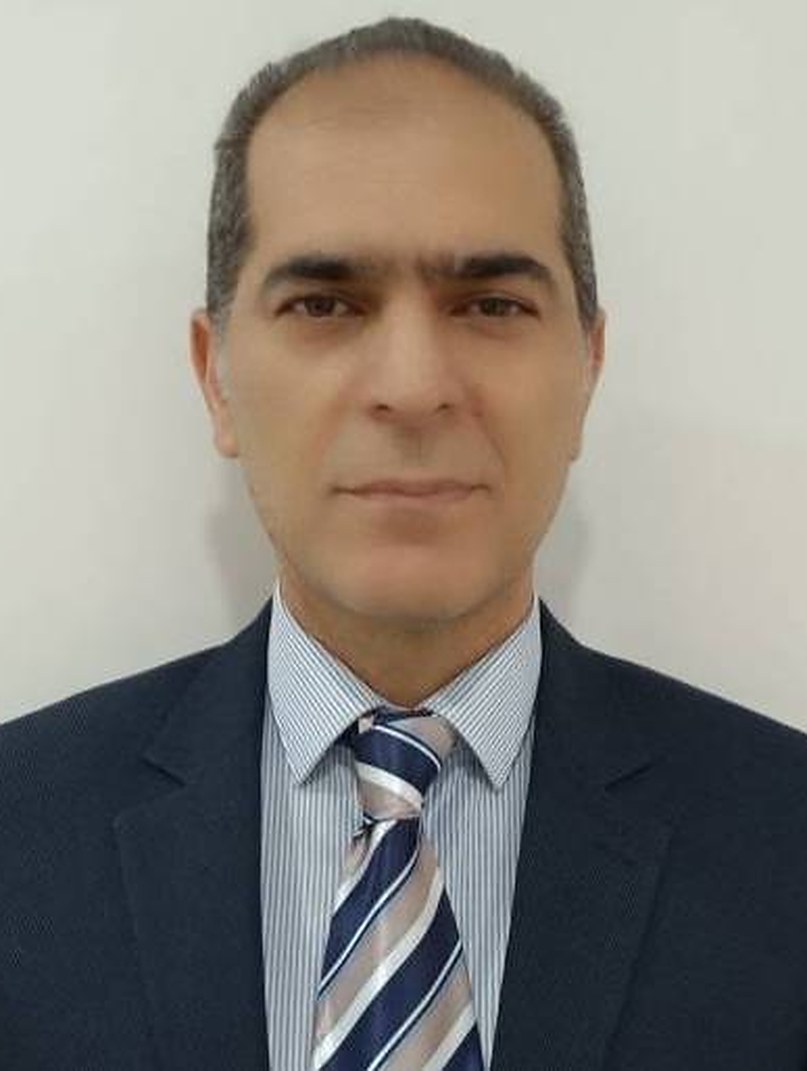
Portrait of Iraj Hedayatpour — energy project management and consulting
Two decades in the gap between design office and site.

Iraj Hedayatpour

Energy Project Management & Consulting

ایرج هدایت‌پور — مشاور و مدیریت پروژه‌های انرژی

Professional biography

Twenty years across the full delivery cycle of energy projects

I am a programme and project manager with the PMP and more than twenty years delivering large EPC projects in oil, gas and infrastructure. My experience covers the whole delivery cycle — engineering, procurement, construction, pre-commissioning and handover — on gas processing units, refinery units, oil field development and long-distance pipelines.

I started at the bottom: first site supervision, then planning and project controls, then engineering management in FEED and MDP, and today programme management. That path is what makes my work different: I have read engineering from the inside and seen the site up close, so the gap between the two is not a theory to me.

My core strength is seeing schedule and cost as one system: building the WBS and baseline, measuring progress and S-curves, earned value management with SPI and CPI, delay recovery planning, and delay analysis with claims and extension-of-time preparation. Alongside that: managing long-lead items and international vendors, contract administration under EPC, turnkey and BOO models, and leading multidisciplinary teams with HSE first.

In engineering my focus is interfaces — exactly where projects usually get delayed: coordination between process, civil/structural, mechanical, piping, and electrical and instrumentation, resolving design conflicts before IFC, and controlling technical documents from datasheets and calculations to P&IDs and line lists.

My second line of work is the practical use of AI in project management. It doesn’t replace field experience; it raises the speed of seeing. Its scope, method and limits are on the AI page.

My native languages are Azerbaijani and Persian, and I work in English at professional working level. I am also available for regional engagements and rotational assignments.

Education
MBA, Construction Project Management · BSc Civil Engineering
Certificates
PMP from the Project Management Institute (PMI) · ISO 21500 · PEB assessor · four AI certificates
Planning tools
Primavera P6 · MS Project · earned value management
Industry scope
Gas processing, refinery units, field development, pipelines
Languages
Azerbaijani (native) · Persian (native) · English (professional working)

Roles and scope of responsibility

Career path

I don’t name clients or contractors; instead I state my role, the type of project, its stage and the work that was genuinely in my hands.

Dec 2022 – present

Engineering Project Manager

Technical assessment of connecting North Pars gas to the South Pars network and integrating it with the feed system of the second refinery

  • Leading engineering studies to assess the technical consequences of bringing North Pars feed gas into the South Pars network, against system stability and pressure compatibility criteria.
  • Managing the engineering interface between supply source and destination infrastructure: pressure control, flow dynamics and gas quality compatibility.
  • Directing the technical assessment of the second refinery’s gas receiving system so design and operating parameters match feed needs and process constraints.
  • Leading multidisciplinary teams — process, flow assurance, piping and instrumentation — to model and simulate the effect of the new source on existing facility operations.
  • Assessing technical risk on capacity bottlenecks, pressure surge and chemical composition incompatibility during blending and transition.
  • Acting as technical authority to align the requirements of three parties and establish the technical feasibility of the tie-in.

In parallel — South Pars Phase 19

Project Manager

Booster station pilot within the Phase 19 gas refinery programme

  • Leading and integrating the station’s FEED and basic engineering in full alignment with the Phase 19 master programme.
  • Managing technical interfaces between process, mechanical, piping, instrumentation and electrical to resolve design conflicts and ensure system integrity.
  • Controlling the engineering cycle: milestone tracking, technical document control — P&IDs, datasheets and calculations — and optimising resources against the schedule.
  • Identifying and mitigating engineering risks at design stage, before they become costly changes in the transition to EPC.
  • Technical representation towards client, consultant and contractors, and securing formal approval of engineering packages.

May 2021 – Dec 2022

Project Manager

EPC development of the Homa, Varavi and Tabnak gas fields

  • Direct oversight of physical progress against the schedule, managing several subcontractors to prevent work interference.
  • Controlling construction compliance with IFC drawings and oil and gas industry standards.
  • Managing site logistics and warehousing, including protecting sensitive equipment in harsh weather.
  • Leading HSE in a live operating environment with permit-to-work discipline.
  • Cost control, reviewing and approving subcontractor valuations, and daily, weekly and monthly reporting to the client.

2020 – 2022

Project Manager

Industrial project in Lamerd County, Fars Province

  • Managing construction, procurement and progress control in a remote project environment.

Earlier

Programme Manager · Planning & Control Manager · Construction Manager

Field developments and pipelines

  • South Pars Phases 6, 7 and 8 — onshore gas processing and export in a multi-contractor EPC environment; coordinating engineering documents, procurement release and work fronts against an integrated baseline.
  • South Pars Phases 9 and 10 — schedule and construction control of gas treating trains and utilities, including a progress measurement system, S-curve reporting and corrective action planning for lagging fronts.
  • North Pars — field development and surface facilities; scope definition, contractor coordination and progress control from engineering to construction.
  • Azar oil field — production and processing facilities; procurement follow-up, subcontractor management and site construction control.
  • Goreh–Jask crude oil pipeline — including pump stations and terminal works; right-of-way sequencing, spread productivity control and multi-front progress reporting along a long corridor.
  • Iranshahr–Chabahar 56-inch pipeline — high-pressure cross-country gas transmission; programme management, material call-off and spread coordination in difficult terrain.

What I want to build

Mission and vision

Mission

I help you see a project’s problems while there is still room to recover — not when all that is left is explaining them.

Vision

I want to turn two decades of EPC field experience and AI tools into a method any team can repeat: seeing risk sooner and genuinely carrying an organisation’s strategic objectives into its programmes and projects. Not as a claim — as a written practice that can be measured.

Values

Four things I insist on

Safety without compromise

Safety is not a project cost; it is the cheapest insurance a schedule can buy. A Zero LTI record comes from discipline, not luck.

Technical honesty

I deliver bad news early, and always with a way forward. No report of mine shows the situation better than it is.

Timely decisions

A late decision costs more than a wrong one. Managing the critical path means deciding before the options run out.

Credit to the team, accountability to the manager

Success belongs to the team; mistakes belong to the programme manager. Over time, only that order builds trust.

What makes this work different

Why me

I have seen both sides of the table: I have sat at the drawing desk, and I have stood in the middle of the site.

Most project trouble starts right there. The design office issues a drawing that does not build easily on site, and the site makes a decision nobody saw in design. I have spent years moving between the two and learning to translate each one’s language for the other — before it turns into a dispute.

Elevator Pitch

My work is closing the gap between engineering and construction.

Core messages

Four things I always say

Everything I write or say in a meeting comes back to at least one of these four.

  1. Positioning

    A project is won neither in the design office nor on site — it is won in the gap between the two, and managing that gap is my work.

  2. Safety

    Safety is not a project cost; it is the cheapest insurance a schedule can buy.

  3. Decisions

    A late decision costs more than a wrong one; managing the critical path means deciding before the options run out.

  4. AI

    AI does not replace the project manager; the project manager who uses it sees risk sooner.

Golden rule

If you can’t say a sentence the same way to the client and to the site team, don’t write it.

Voice

How I communicate

In letters, in meetings and on this site, I keep to these four.

Precise and data-driven

Every claim is backed by a number, a progress percentage or a standard.

Calm and dependable

Even in a crisis my voice doesn’t rise: facts first, then options, then a recommendation.

Clear and unadorned

If the audience is not technical, terms like FEED, MDP or IFC are explained on the spot.

A guide, not a boss

I stand beside the team, not above it: success is the team’s, mistakes are mine.

What I am working towards

This year’s goal

This year I want to work alongside owners and contractors so they use AI properly in project management and carry their organisation’s strategic objectives into programmes and projects — through diagnostic sessions, monthly advisory and project reviews.

If this way of working fits your project’s problem today

Let’s book a diagnostic session; it becomes clear sooner than any other way.

Book a Project Diagnostic Session